Blog
By Randy Hurley MD, cTropMed Retired, HealthPartners and Regions Hospital Cancer Care Centers University of Minnesota, Global Health Faculty
By Randy Hurley MD, cTropMed HealthPartners and Regions Hospital Cancer Care Centers Global Health Faculty, University of Minnesota
KCMC-FCCT Tumor Board A 57-year-old woman presented with right upper quadrant pain, nausea, night sweats and a 8cm liver mass. She was from a remote area of Tanzania and provided history that she has been aware of a liver mass for 20 years. The details of this prior diagnosis were not available, however. Her son had recently accepted a job in Arusha and facilitated a trip to Moshi to visit the cancer center at KCMC. A CT scan identified a heterogenous right lobe of liver mass with central necrosis and calcifications. There was no clinical or laboratory evidence of cirrhosis. Hepatitis serologies were negative. The alpha-fetoprotein was minimally elevated. An ultrasound guided biopsy revealed well-differentiated glandular appearing cells with a mild degree of fibrosis. The differential diagnosis, histologically, included a well-differentiated hepatocellular carcinoma or cholangiocarcinoma or possibly benign disease. A battery of immunohistochemical stains, currently unavailable at KCMC would have helped to better classify the pathology. Hepatocellular carcinoma is the third leading cause of cancer deaths in Tanzania (Lyimo eta all, Cancer mortality patterns in Tanzania, J Global Oncol 2020 https://ascopubs.org/doi/10.1200/JGO.19.00270 . It typically has a very aggressive course with a median survival measured in months. If the 20-year history of a liver mass is correct, perhaps the lesion represents a large, benign, bile duct adenoma. There have been case reports of such entities in the literature. Koga F, et al World Journal of Clin Oncol 2012 https://www.wjgnet.com/2218-4333/full/v3/i4/WJCO-3-63-g001.htm The ultimate plan was to refer her to Muhimbili National Hospital in Dar Es Salaam for partial liver resection. KCMC and Muhimbili also perform regular tumor conferences to review patients being sent for further management; resection is planned for June 2026. Randy Hurley MD Medical Oncologist (Retired) Health Partners—Park Nicollet
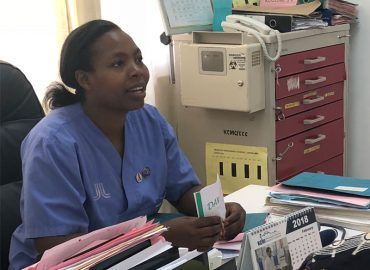
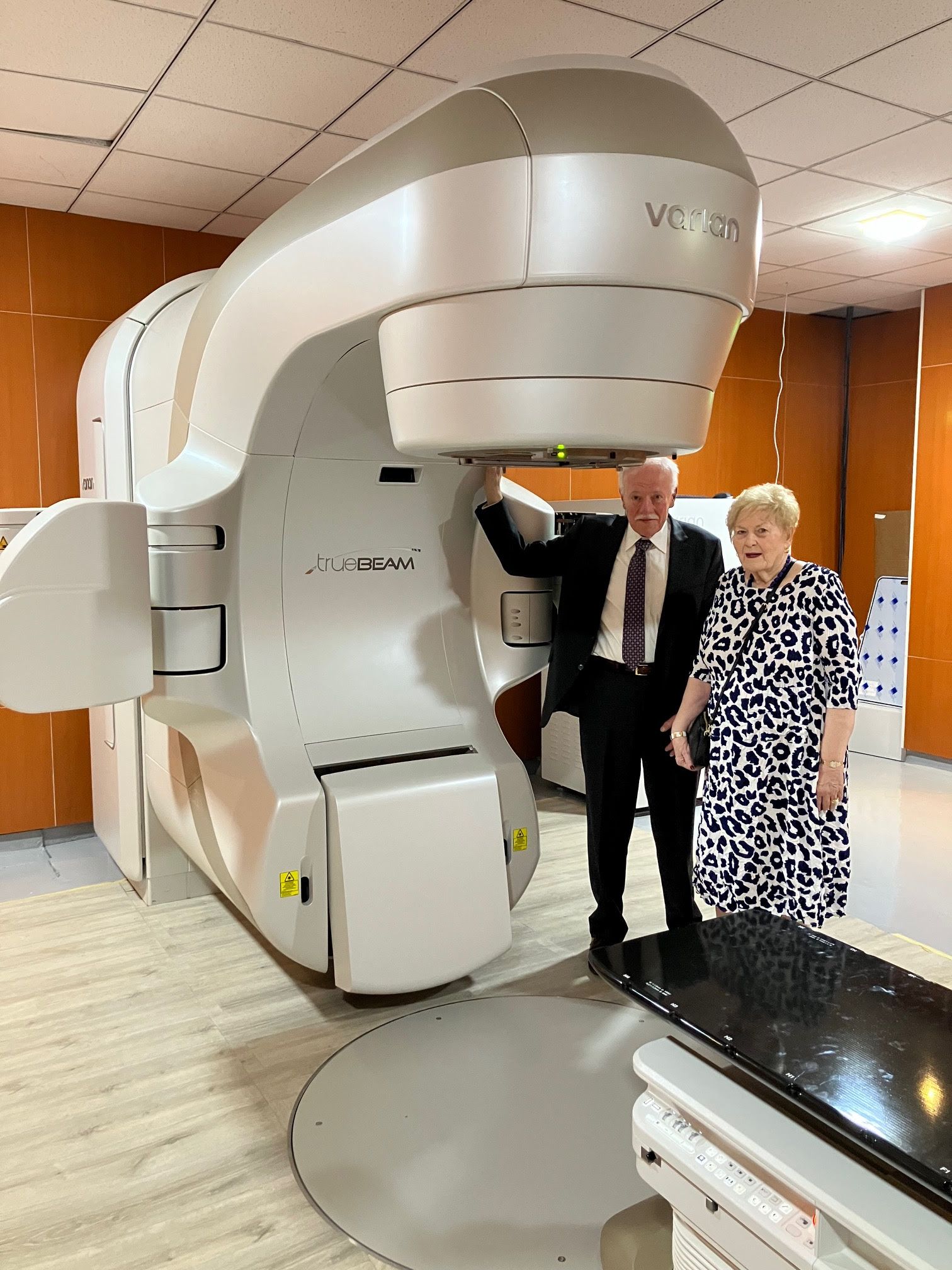
KCMC-FCCT Tumor Board Radiation-related questions were the focus of two of the three cases discussed at this month’s Tanzania-Minnesota tumor board. This coincides with the opening of the Radiation Treatment Center at KCMC last month. Currently, a number of patients are receiving palliative radiation therapy, and several are undergoing curative treatment for prostate cancer, breast cancer, cervical cancer, rectal cancer and lymphoma A 54 yr old woman presented with abdominal distension and a large palpable abdominal mass. A CT disclosed a > 20cm intra-abdominal mass that appeared to be arising from the uterus. There was mass effect on the bowel and severe right hydronephrosis. Calcified uterine myomas were identified as well as a small non-calcified lung nodule in the lung bases on the abdominal CT scan. A lytic lesion was seen in the T8 vertebral body. An exploratory laparotomy revealed an unresectable, greater than 40cm abdominal mass infiltrating the retroperitoneum and involving small bowel. A biopsy showed a spindle cell tumor morphologically consistent with a gastrointestinal stromal tumor (GIST). The tumor was CD117 negative suggesting a rare, CD117-negative GIST. Other considerations included a leiomyosarcoma or liposarcoma however additional molecular and immunohistochemical stains could not be performed to provide a definitive diagnosis. It was unclear whether this tumor was originating from the uterus, the small bowel or retroperitoneum. The discussion revolved around the palliative goal of treatment and whether palliative chemotherapy (such as a doxorubicin-ifosfamide-mesna regimen) would provide benefit. CD117-negative GISTs are rare tumors often related to mutations in PDGFR and typically do not respond as well as CD117-positive GISTs to imatinib. Other tyrosine kinase inhibitors, such as sunitinib and regorafenib are not readily available in Tanzania. A 42 yr old HIV positive woman with a preserved CD4 count of 460 on antiretrovirals developed rapid progression of metastatic squamous cell cancer of the cervix 2 months following total abdominal hysterectomy and bilateral salpingo-oophorectomy (TAH and BSO) for stage 3 cervical cancer. In January, 2026, she had undergone a TAH and BSO at an outside hospital and had biopsy-confirmed para-aortic lymph node involvement. She presented with back and abdominal pain from a rapidly enlarging para-aortic mass infiltrating the psoas muscle. This mass had grown substantially in the past 2 months since surgery and was causing significant pain and disability. The discussion revolved around whether palliative radiation (3000cGy in 10 fractions) or palliative chemotherapy (with a regimen such as carboplatin and paclitaxel) would be the best option. Cervical cancer, historically has been an “AIDS-defining cancer” with the immunosuppressive effects of HIV contributing to a more aggressive course. A 61 yr old man developed progressive nausea, vomiting, headache and left hemiplegia 19 days after undergoing a subtotal resection of a right temporal grade 3 astrocytoma. Repeat brain imaging identified rapid recurrence of his right sided brain tumor with mass effect and midline shift. Despite mannitol and dexamethasone, he remained severely debilitated. A discussion revolved around goals of care given the severely debilitated status. Treatment options considered included repeat craniotomy vs definitive chemoradiotherapy with temozolomide vs short course palliative radiation in 15 fractions. Gliomas are the most common primary brain tumors in adults in Tanzania. Patients often present late and have poor outcomes. (https://www.ajol.info/index.php/eajns/article/view/276288) Molecular characterization of gliomas in Tanzania with IDH mutation status and MGMT promoter methylation status is virtually unknown. Randy Hurley MD, cTropMed Global Health Faculty, University of Minnesota
Four cases were presented in February 2025.
The first case involved a 34 year-old woman with locally advanced and possibly metastatic leiomyosarcoma of the orbit. She had presented with one year of left eye symptoms including pain, vision loss and proptosis.
After a several month hiatus, the KCMC-FCCT Tumor Board resumed January 2025 with the presentation of a fascinating case of a small-round blue cell tumor in a 23 year-old man.

After a several month hiatus over the summer, the Minnesota-KCMC tumor board resumed in September with presentation of a complex metastatic breast cancer case. A 56 year-old woman with a 4 year history of metastatic breast cancer with bone-predominant involvement had developed jaundice, melena, transfusion dependent anemia, thrombocytopenia and splenomegaly.
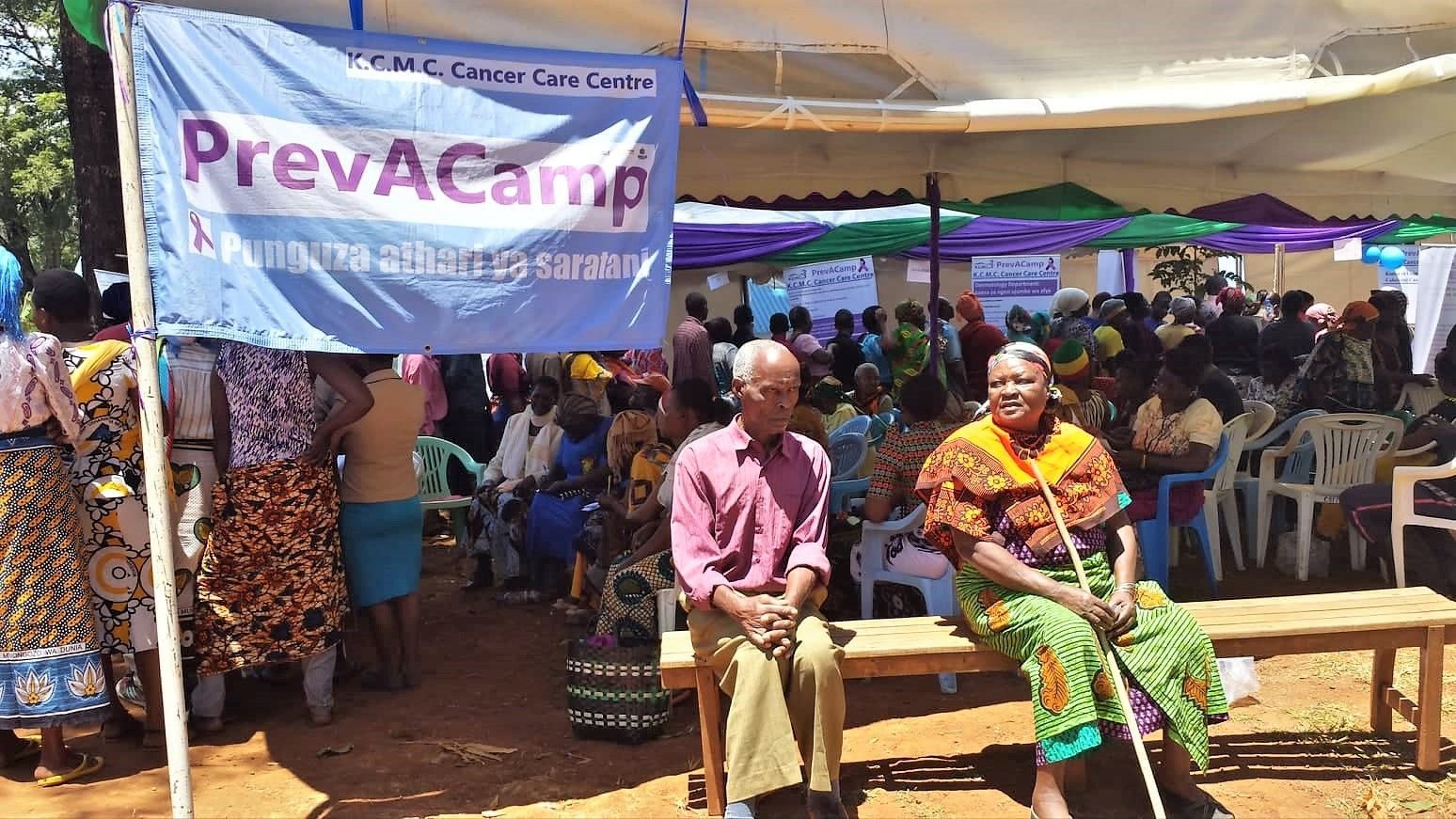
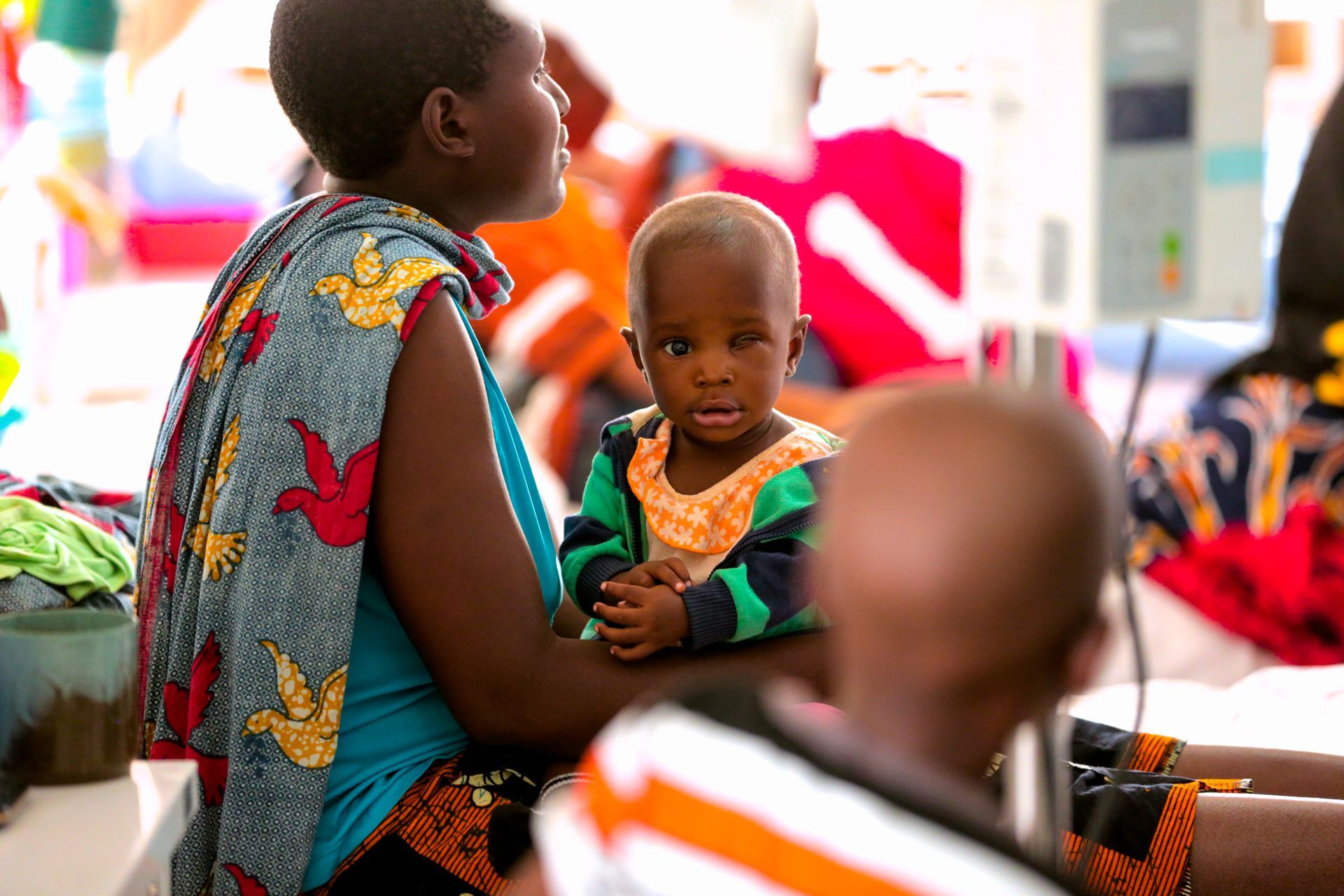
In a country devastated by cancer, a comprehensive cancer centre would seem the ultimate solution. In reality, it is only one piece of the care and treatment objective. Awareness and education, while seemingly basic, are proving to be essential in improving the lives of those who are suffering. The development of the KCMC Cancer Care Centre in Moshi means diagnosis and treatment of cancer are now possible in northern Tanzania. However, patients often arrive at the hospital in Moshi too late, many times at an incurable stage of cancer. Last year, 85 percent of the patients presenting for help at the Cancer Care Center were in stage III or IV. For those who’ve dedicated their lives to caring for the sick and suffering, this is an unbearable reality. The question that needed to be answered was “why?” Not surprising, the answer was simple. People living in this vast, desolate region were unaware. They didn’t understand cancer. They weren’t aware that early detection would increase their chances of living. They just didn’t know. To complicate matters, many health care workers in the region lacked significant knowledge of cancer and were not trained to facilitate referrals. There was a high need for raising cancer awareness in the population. That meant increasing knowledge about risk factors, symptoms and the possibility of treatment.
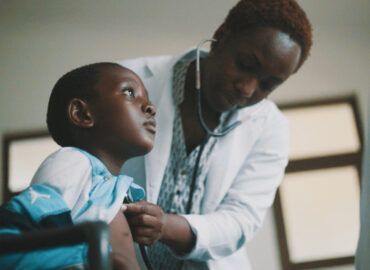
By Randy Hurley MD, cTropMed HealthPartners and Regions Hospital Cancer Care Centers Global Health Faculty, University of Minnesota Three cases were discussed at the May 2024 KCMC-FCCT tumor board. Only one case was presented in March 2024 and April 2024. All five cases are summarized below. A 64 year-old female
By Randy Hurley MD, cTropMed HealthPartners and Regions Hospital Cancer Care Centers Global Health Faculty, University of Minnesota September 20, 2023 The October tumor board was our first multidisciplinary neuro-oncology tumor board. Two cases of glioblastoma multiforme (GBM) were discussed. Development of a neuro-oncology program at KCMC was the vision
By Randy Hurley MD, cTropMed HealthPartners and Regions Hospital Cancer Care Centers Global Health Faculty, University of Minnesota September 20, 2023 A single case of breast cancer was discussed at the September tumor board. A 52 year-old nulliparous woman with no family history of breast cancer presented with bloody nipple
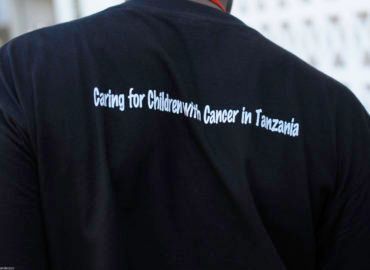
By Randy Hurley MD, cTropMed HealthPartners and Regions Hospital Cancer Care Centers Global Health Faculty, University of Minnesota July 19, 2023 Again, very challenging cases were presented in July 2023. The first case involved a 24-year-old woman with a widely metastatic adenocarcinoma with papillary features with lung liver and lymph
By Randy Hurley MD, cTropMed HealthPartners and Regions Hospital Cancer Care Centers Global Health Faculty, University of Minnesota May 17, 2023 The virtual Tanzania-Minnesota tumor board for May 2023 was held last week. (A tumor board was not formally conducted in April 2023 because KCMC cancer center personnel were visiting
By Randy Hurley MD, cTropMed HealthPartners and Regions Hospital Cancer Care Centers Global Health Faculty, University of Minnesota April 14, 2023 February. A recurring theme continues to be the need for radiation therapy facilities at KCMC to provide adequate cancer care. A case of a 45-year-old man with a plasmacytoma
By Randy Hurley MD, cTropMed HealthPartners and Regions Hospital Cancer Care Centers Global Health Faculty, University of Minnesota January 18, 2023 In an earlier newsletter I shared the news that the Cancer Care Centre at KCMC had received a grant to develop cervical cancer screening capacity at district hospitals in
By Randy Hurley MD, cTropMed HealthPartners and Regions Hospital Cancer Care Centers Global Health Faculty, University of Minnesota January 18, 2023 Five cases were presented at the January tumor board that continue to show the complexity of cases challenging the oncologists at KCMC. Two of the cases involved multiple primary
By Randy Hurley MD, cTropMed HealthPartners and Regions Hospital Cancer Care Centers Global Health Faculty, University of Minnesota November 16, 2022 Our November tumor board was held on Wednesday 11/16/22. Three cases were presented, two of which required neurosurgery expertise and therefore neurosurgeons from the University of Minnesota participated.

By Randy Hurley MD, cTropMed HealthPartners and Regions Hospital Cancer Care Centers Global Health Faculty, University of Minnesota October 26, 2022 Three cases were reviewed at the October tumor board video conference: a case of locally advanced acral melanoma, a case of esophageal cancer in a 15-year-old and a case
By Randy Hurley MD, cTropMed HealthPartners and Regions Hospital Cancer Care Centers Global Health Faculty, University of Minnesota September 27, 2022 Two cases were discussed at the KCMC-Minnesota tumor board this month The first case was a 60-year-old woman with a locally advanced breast cancer manifesting as a 5cm breast
By Randy Hurley MD, cTropMed HealthPartners and Regions Hospital Cancer Care Centers Global Health Faculty, University of Minnesota August 17, 2022 Two complicated cancer cases were discussed at this month’s tumor board. The first case was a 7-year-old girl with a large 22cm tumor mass involving the right humerus and
WITH YOUR SUPPORT
FCCT and its partners will save lives, ease suffering and transform cancer outcomes for the people in Northern Tanzania!